
The legal system wrongly assumes that video always reveals objective truth.
[Source via Boston Globe By Sandra Ristovska]
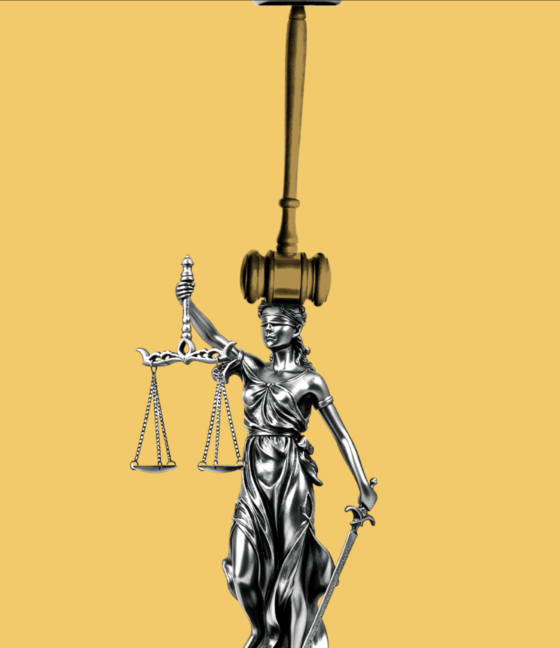
Sandra Ristovska, a professor of media studies at the University of Colorado Boulder, is a fellow at the Center for Advanced Study in the Behavioral Sciences at Stanford University.
A law enforcement officer’s body camera can be a tool for justice. The footage from one of them helped clear Dana Briggs, a 70-year-old Air Force veteran who was charged with assault after a federal officer knocked him down during an ICE protest outside Chicago last September. The promise of moments like this is fueling the latest calls to expand body camera use among immigration officers.
But putting body cameras on more officers won’t make law enforcement more just and fair unless we also establish clearer guidelines on how their footage can be used as evidence in court. Body cameras can conceal reality as easily as they reveal it.
As an associate professor of media studies and the founding director of the Visual Evidence Lab at the University of Colorado Boulder, I have spent the past decade studying how video evidence is used in court and can at times lead to unjust outcomes.
US courts at all levels lack clear guidelines on how video can be presented and used as evidence. The pervasive assumption is that video requires no unified guidance because seeing is intuitive — thus, we should all see the same, objective truth.
But not everyone who sees a video interprets it in the same way. And how a video is presented can influence perception and interpretation. For example, people watching videos in slow motion are more likely to judge that the actions depicted in the videos were intentional. And intent is critical for determining legal responsibility. While an appellate court in Colorado has recognized this biasing effect, most state and federal courts allow videos to be played in slow motion.
Such perceptions of intent are especially critical with body cameras. Research shows that viewers of body camera footage are less likely to judge officers as having acted intentionally than those who watch the same incident recorded by a car’s dashboard camera. A body camera doesn’t show the officer’s body and face. It is harder for our minds to find fault with people we can’t see in a video.
The perspective of the body camera also impacts perceptions of the civilians depicted in the footage. People who watch body camera videos of police using force are more likely to view dark-skinned individuals as culpable than light-skinned individuals — and therefore more likely to conclude that law enforcement officers’ decisions were appropriate and justified in such cases.
A body camera records what an officer sees and says, but it can also shape the story that follows. In Chicago in 2018, a body camera recorded officers shooting and killing Harith Augustus, a licensed gun owner. The footage doesn’t show Augustus threatening the officers, but it does capture audio of an officer saying “Police shot. Shots fired at the police. Or … Police officer sh—.” The ensuing narrative portrayed the dying man as the “offender” and the officer who shot him as the “victim,” even as dashboard camera footage released 13 months later cast doubt about whether Augustus had ever pulled a gun.
Generative AI is further complicating matters. To shorten the time needed to write reports, police units across the country are increasingly using AI tools to transcribe body camera footage. In one instance, the tool mistakenly claimed a Utah officer had turned into a frog because it picked up dialogue from “The Princess and the Frog” playing in the background. This comical error underscores how easily AI can distort official records.
To ensure that video evidence is presented accurately and fairly in court, timely and complete public access to body camera footage is imperative. AI transcription tools should have no place in official police records. Judges should have training on the shortcomings of video evidence, and there should be instructions for jurors that empower them to ask relevant questions about the framing, perspective, and context of footage. Courts already have similar instructions for handling eyewitness testimony.
If we want body cameras to make law enforcement more accountable, we must first ensure that the law is even-handed when it comes to cameras.