Black & Blue III – PPP (Plans, Policies & Proposals)
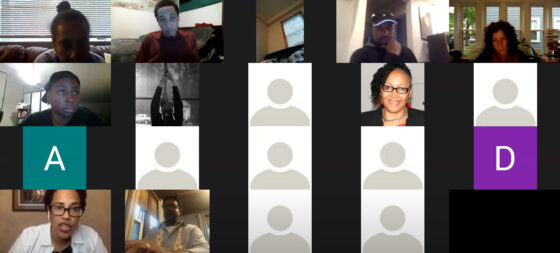
The Complete video from our Zoom Town Hall Community Conversation on Police and Policing.
ALL NEW & UPDATED!! SHOT BY THE POLICE: BOSTON & BEYOND
SHOT BY THE POLICE: BOSTON & BEYOND
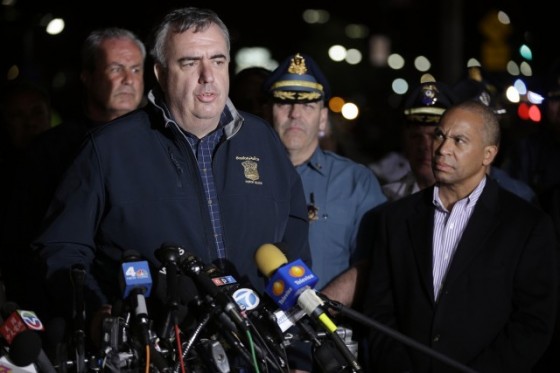
By Chris Faraone Originally Published in The American Prospect The Boston police commissioner is being floated as a potential nominee for head of Homeland Security, but there’s trouble at home, with allegations of rampant racial discrimination in his force. When two homemade bombs derailed the Boston Marathon on April 15, longtime Mayor Thomas Menino was laid up in Brigham and Women’s Hospital, recovering from his latest setback in a string of recent ailments. The mayor of two decades immediately checked out of critical care to attend police and media briefings; but in a wheelchair with his medical bracelet still snug around his wrist, Menino couldn’t deliver the sort of reassuring rhetoric that Rudy Giuliani did for New Yorkers after September 11, when he stood with rage and pride atop a mountain of World Trade Center wreckage. With Hizzoner on the sidelines, Americans sought answers from a number of surrogate authority figures, none of whom calmed the public quite like Boston Police Department (BPD) Commissioner Ed Davis. Tall and awkward but confident, with an endearing New England brogue, Davis reached through the news cameras, wrapped his meaty arms around America, and promised a swift response. In the time since, the commissioner has amassed admirers all the way to Capitol Hill; for the accolades, pundits often cite his handling of operations after the bombing, and his coordinating with outside agencies to immobilize the Tsarnaev brothers. Such admiration is now fueling reports that Davis may be considered to head the Department of Homeland Security—even though his hero status on the national scene is based more on a hunch about the commissioner’s character than on his actual abilities. While people elsewhere are still gushing over how Davis nabbed the Marathon villains, sentiments toward his department have soured in Boston. This summer has been bloody far beyond the bombings, with more than 100 shootings since April and a recent high-profile homicide that’s salted fragile wounds, dominated headlines, and sent Davis scrambling to save face. All this while officers of color, outraged after years of failed attempts to bolster BPD diversity, publicly decry the commissioner. For his critics, it’s unfathomable that Davis—with his reluctance to address institutional turmoil—would be allowed to stay in his current position, let alone be promoted to a top spot within the national security apparatus. The gloves finally came off on August 7. Along with their spouses and a chorus of supporters, members of the Massachusetts Association of Minority Law Enforcement Officers (MAMLEO) packed the banquet room of their shabby clubhouse in Dorchester. MAMLEO President Larry Ellison held a press conference to air his group’s latest grievance—that the week before, five white officers were promoted to supervisory positions while nine equally qualified candidates of color were denied promotions. The fight for equality in city hiring has raged eternally in Boston, and Ellison turned up the heat by declaring that the members of MAMLEO—a federation comprising black, female, Asian, and Latino officers—had cast a vote of “no confidence” in Davis. The BPD withholds its personnel data, and consistently dodges inquiries about diversity within its ranks. Sourced estimates, however, suggest that more than 90 percent of lieutenants and captains are white, while even Davis has acknowledged a disparity in the number of superior officers of color. At the MAMLEO presser, City Councilor Charles Yancey, an African-American who has represented the crime-ridden Mattapan neighborhood for three decades, expressed frustration over the futility of this ongoing fight. “How can we have a city of Boston that’s 53 percent people of color,” asked Yancey, “and not have one person of color heading up any of the 11 police districts?” Others piled on. At the same press conference, Boston NAACP President Michael Curry conceded that he’d recently thanked Davis for “not responding to the initial reports in the media that the bombers were ‘dark-skinned.’” His praise ended there; Curry, hardly known as a firebrand or radical, tore into the commissioner’s record on everything from hiring to illegal civilian searches, going so far as to say that members of the BPD gang unit have personally told the NAACP that they’ve been given orders to violate the rights of young black men. Of the many charges against Davis, one prominent knock has been on the commissioner’s reluctance to hold cops accountable for using lethal force. Controversy has especially stemmed from his failure to censure an officer named Michael McManus, who in 2008 initiated the violent arrest of a college student who died after cops tackled him. Two years later McManus was involved in the beating of an unarmed black teen. The incident was caught on camera. Even after the video went viral, prompting protests and widespread condemnation, McManus kept his job, and this year went on to earn a BPD medal of excellence for his “continued dedication to duty and professionalism.” At the same ceremony, only two officers were awarded higher honors. Their accomplishment: killing Mark Fernandes McMullen, an unarmed black suspect who, after speeding away from an accident, police chased 17 miles out of Boston before shooting through his driver’s side window. With those and other fatal incidents cast in the background, members of MAMLEO also expressed frustration about the recent reaction to the kidnapping and stabbing death of a 24-year-old woman named Amy Lord. A white resident of South Boston, Lord seemingly attracted more news coverage than did all of this summer’s victims of color combined. In the hysteria, Davis stripped a cop named Jerome Hall-Brewster of his detective shield after learning that he had ignored leads from a previous crime that could have helped arrest Lord’s alleged killer months ago. In addition to circumventing due process by abruptly demoting Brewster—a MAMLEO member—the commissioner added to the consternation of Hall-Brewster’s fellow black officers by announcing the decision in front of a cheering white crowd at a South Boston elementary school. Davis has made several past commitments to diversify his upper ranks and to address interracial tensions in the BPD. Nevertheless; in his latest round of hiring, his brass passed up all qualified applicants of
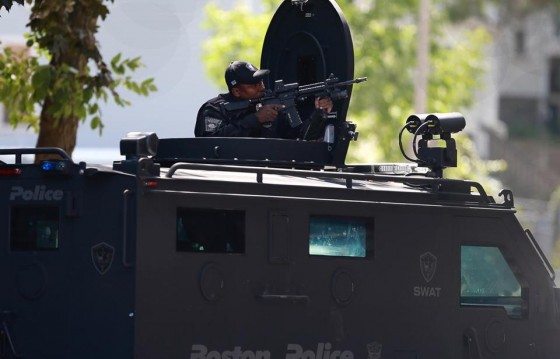
UPDATE: The Second Suspect has been apprehended and identified as Donta Lewis. The Herald reports police found him in a crawl space in his girlfriend’s house. Yesterday at approximately 1:47 pm, according to BPD tweets and reports, officers from C-11 District in Dorchester responded to a radio call of a person shot in the are of 1500 Dorchester Avenue. It is unclear whether this shooting was part of, or was what initiated the police action that resulted in the death of one suspect and minor shooting injuries to two officers. A later report identified the suspect who died as 20 year old Roudy Hendricks of Brockton. The Globe reports that two officers from the drug unit were working undercover in the area. The Herald adds that officers Harry Jean and Terry Cotton were “running surveillance in an unrelated matter about 2 p.m. when they spotted Hendricks and the other suspect at Dorchester Avenue and Shepton Street.” The BPD allege that the plainclothes officers approached the two suspects and Hendricks opened fire on them while the other suspect “started to move his clothing as if he had a gun,” Commissioner Ed Davis said. It was not clear whether the second suspect had a gun, but police are assuming he does for now. The search for the second suspect saw parts of Dorchester Ave. and the MBTA service in the area shut down for a time. Commissioner Davis did not offer an explanation as to why the officers approached the two men, only that the incident is under investigation and that “something about the two suspects drew their attention.” Police had earlier described the two suspects as being in a “confrontation.” At the press conference Davis said “This is the second time in a week or so that we’ve had officers violently attacked by individuals who have no regard for the officers’ safety, and I think it’s a troubling trend,” referencing the shooting of a Middlesex sheriff’s deputy last week at the Massachusetts Eye and Ear Infirmary where the suspect was shot in the chest after getting hold of an officers weapon and shooting a deputy. “But the officers are trained well and all indications are they did exactly what they are supposed to do when they are attacked like this” Davis Said. As with every officer involved shooting, Suffolk DA Dan Conley’s office will be investigating the incident. Hendircks was pronounced dead on the way to the hospital. BPD Commissioner Ed Davis said: “This individual has a lengthy and violent record” which the Herald reported includes a June 2010 bust for gun possession. Friends and classmates of Hendricks interviewed by the Globe were surprised. Tarahn Maxwell, 19, said he was a “class clown” in high school. “He wouldn’t have done this without being provoked,” he said. “He was just hanging around with the wrong people,” said another classmate, Malika Austin, 20. The broad daylight shootout and resulting investigation and search left many residents shaken and asking for answers. VIEW PHOTOS from the Boston Globe
Universal Hub reports that according Boston Police Commissioner Ed Davis, a Middlesex County prisoner who was about to get medical treatment today at the Mass. Eye and Ear Infirmary managed to grab a hold of a deputy sheriff’s gun and shoot the deputy. A second deputy then shot the prisoner in the chest. Comissioner Davis said the prisoner, who was from a Middlesex County correctional facility, arrived at the Mass. Eye and Ear emergency room shortly before noon, with two armed deputies, to be treated for an unspecified condition. As the prisoner’s handcuffs were being removed, he began to struggle and grabbed hold of the deputy’s gun, which fired into the deputy’s leg. The other deputy then opened fire and hit the prisoner in the chest. The prisoner is now in critical condition at Mass. General Hospital. The deputy was also treated there and is in much better shape, Davis said. The emergency rooms at both hospitals were briefly locked down to the public as local, state and federal law-enforcement officers reported to the scene. The Suffolk County District Attorney’s office reports it is also investigating the incident.
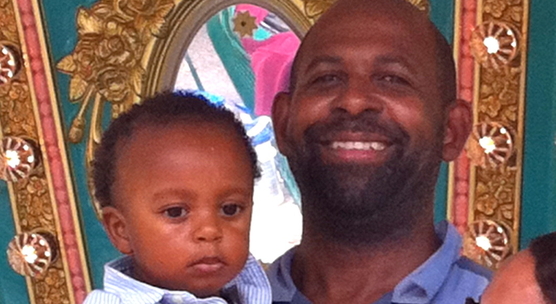
Sign the Petition By: Karen McMullen My brother Mark Fernandes McMullen was shot and killed on Sept 7, 2011 by Boston Police Officer Christopher Carr. Even though Mark was unarmed and immobilized, and Carr was outside of his city limits, Carr was cleared of any wrongdoing in a closed investigation. The request for a public inquest by the family, their lawyers and prominent organizations such as the ACLU, NAACP, National Police Acccountability Project and Lawyers Committee for Civil Rights is being ignored. While the authorities have ended their investigation, they still refuse to release key evidence in the case, including photos that hold the key to what actually happened that day. The Why was Mark Shot Coalition is an organization created after the death of our son, brother, husband and friend Mark at the hands of the police. The coalition is made up of family; police abuse victims, survivors, and their families; and advocacy and community groups. The Why was Mark Shot Coalition calls for justice for Mark and all victims. We call for an independent prosecutor, the release of all evidence, a public inquest and full accountability of all officers and supervisors involved. We want an end to the pattern of police killing defenseless people and going unpunished. Sign the Petition