diversity

Justice, Police, Crime, Law and Public Safety, News, Organize The Hood, Politics, US National News

Ed Davis’s Minority Report

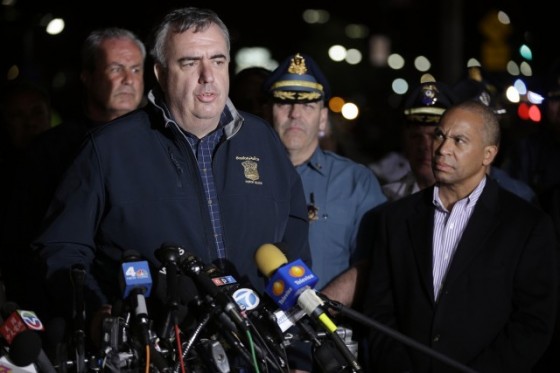
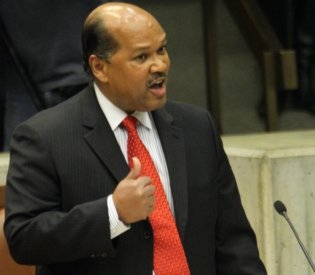
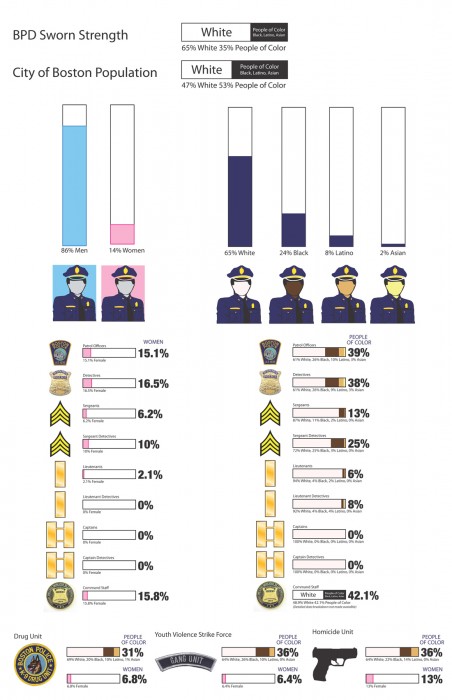
By Chris Faraone Originally Published in The American Prospect The Boston police commissioner is being floated as a potential nominee for head of Homeland Security, but there’s trouble at home, with allegations of rampant racial discrimination in his force. When two homemade bombs derailed the Boston Marathon on April 15, longtime Mayor Thomas Menino was laid up in Brigham and Women’s Hospital, recovering from his latest setback in a string of recent ailments. The mayor of two decades immediately checked out of critical care to attend police and media briefings; but in a wheelchair with his medical bracelet still snug around his wrist, Menino couldn’t deliver the sort of reassuring rhetoric that Rudy Giuliani did for New Yorkers after September 11, when he stood with rage and pride atop a mountain of World Trade Center wreckage. With Hizzoner on the sidelines, Americans sought answers from a number of surrogate authority figures, none of whom calmed the public quite like Boston Police Department (BPD) Commissioner Ed Davis. Tall and awkward but confident, with an endearing New England brogue, Davis reached through the news cameras, wrapped his meaty arms around America, and promised a swift response. In the time since, the commissioner has amassed admirers all the way to Capitol Hill; for the accolades, pundits often cite his handling of operations after the bombing, and his coordinating with outside agencies to immobilize the Tsarnaev brothers. Such admiration is now fueling reports that Davis may be considered to head the Department of Homeland Security—even though his hero status on the national scene is based more on a hunch about the commissioner’s character than on his actual abilities. While people elsewhere are still gushing over how Davis nabbed the Marathon villains, sentiments toward his department have soured in Boston. This summer has been bloody far beyond the bombings, with more than 100 shootings since April and a recent high-profile homicide that’s salted fragile wounds, dominated headlines, and sent Davis scrambling to save face. All this while officers of color, outraged after years of failed attempts to bolster BPD diversity, publicly decry the commissioner. For his critics, it’s unfathomable that Davis—with his reluctance to address institutional turmoil—would be allowed to stay in his current position, let alone be promoted to a top spot within the national security apparatus. The gloves finally came off on August 7. Along with their spouses and a chorus of supporters, members of the Massachusetts Association of Minority Law Enforcement Officers (MAMLEO) packed the banquet room of their shabby clubhouse in Dorchester. MAMLEO President Larry Ellison held a press conference to air his group’s latest grievance—that the week before, five white officers were promoted to supervisory positions while nine equally qualified candidates of color were denied promotions. The fight for equality in city hiring has raged eternally in Boston, and Ellison turned up the heat by declaring that the members of MAMLEO—a federation comprising black, female, Asian, and Latino officers—had cast a vote of “no confidence” in Davis. The BPD withholds its personnel data, and consistently dodges inquiries about diversity within its ranks. Sourced estimates, however, suggest that more than 90 percent of lieutenants and captains are white, while even Davis has acknowledged a disparity in the number of superior officers of color. At the MAMLEO presser, City Councilor Charles Yancey, an African-American who has represented the crime-ridden Mattapan neighborhood for three decades, expressed frustration over the futility of this ongoing fight. “How can we have a city of Boston that’s 53 percent people of color,” asked Yancey, “and not have one person of color heading up any of the 11 police districts?” Others piled on. At the same press conference, Boston NAACP President Michael Curry conceded that he’d recently thanked Davis for “not responding to the initial reports in the media that the bombers were ‘dark-skinned.’” His praise ended there; Curry, hardly known as a firebrand or radical, tore into the commissioner’s record on everything from hiring to illegal civilian searches, going so far as to say that members of the BPD gang unit have personally told the NAACP that they’ve been given orders to violate the rights of young black men. Of the many charges against Davis, one prominent knock has been on the commissioner’s reluctance to hold cops accountable for using lethal force. Controversy has especially stemmed from his failure to censure an officer named Michael McManus, who in 2008 initiated the violent arrest of a college student who died after cops tackled him. Two years later McManus was involved in the beating of an unarmed black teen. The incident was caught on camera. Even after the video went viral, prompting protests and widespread condemnation, McManus kept his job, and this year went on to earn a BPD medal of excellence for his “continued dedication to duty and professionalism.” At the same ceremony, only two officers were awarded higher honors. Their accomplishment: killing Mark Fernandes McMullen, an unarmed black suspect who, after speeding away from an accident, police chased 17 miles out of Boston before shooting through his driver’s side window. With those and other fatal incidents cast in the background, members of MAMLEO also expressed frustration about the recent reaction to the kidnapping and stabbing death of a 24-year-old woman named Amy Lord. A white resident of South Boston, Lord seemingly attracted more news coverage than did all of this summer’s victims of color combined. In the hysteria, Davis stripped a cop named Jerome Hall-Brewster of his detective shield after learning that he had ignored leads from a previous crime that could have helped arrest Lord’s alleged killer months ago. In addition to circumventing due process by abruptly demoting Brewster—a MAMLEO member—the commissioner added to the consternation of Hall-Brewster’s fellow black officers by announcing the decision in front of a cheering white crowd at a South Boston elementary school. Davis has made several past commitments to diversify his upper ranks and to address interracial tensions in the BPD. Nevertheless; in his latest round of hiring, his brass passed up all qualified applicants of

Education, Features, Focus on Diversity, News, Youth

Report Finds MA Schools “Regressing” on Diversity in Schools

A report by the UCLA Civil Rights Project finds that Massachusetts schools have regressed over the last two decades from leading the nation in integration to being some of the most highly segregated schools in terms of race, ethnicity and economics. The time has come for Massachusetts to get serious about dealing more effectively with its diversity. Because the nonwhite populations have historically been small and there is a general white attitude that the state is progressive and has done enough, the issues are often ignored. Losing Ground: School Segregation in Massachusetts Report by: Jennifer B. Ayscue, Alyssa Greenberg, John Kucsera (Contributor), Genevieve Siegel-Hawley (Contributor), Gary Orfield Executive Summary Though once a leader in school integration, Massachusetts has regressed over the last two decades as its students of color have experienced intensifying school segregation. In 1965 Massachusetts passed the Racial Imbalance Act, becoming an emerging leader in school integration. In 1966, the Metropolitan Council for Educational Opportunity (METCO) was established in Boston and Springfield to provide for inter-district transfers between city and suburban schools. In 1974, an amendment was signed into law that prohibited the state from enacting mandatory assignment for desegregation but that provided valuable incentives for local school districts to create voluntary school desegregation plans. In the 1980s and 1990s, 22 school districts adopted such plans. Meanwhile, choice options, such as magnet schools throughout the state, charter and pilot schools in Boston, and controlled choice in Cambridge, have had both positive and negative effects on achieving diverse schools in the state. Alongside multiple court decisions restricting the use of race in student assignment plans, districts in Massachusetts, including Boston and Cambridge, began to use other approaches, to achieve diversity in their schools during the late 1990s and early 2000s, such as socioeconomic status with a race-conscious backup factor in instances in which socioeconomic status resulted in segregation. In the late 1990s, the state’s Department of Education eliminated the Bureau of Equal Educational Opportunity, which had overseen desegregation efforts. In 2001, the state eliminated the incentives that had been previously provided to school districts that chose to adopt desegregation plans. The interdistrict transfer program METCO continues to operate in 2013, though funding is historically unstable and insufficient to meet demand for the program. This report investigates trends in school segregation in Massachusetts over the last two decades by examining concentration, exposure, and evenness measures by both race and class. After exploring the overall enrollment patterns and segregation trends at the state level, this report turns to two main metropolitan areas within the state—Boston and Springfield—to analyze similar measures of segregation for each metropolitan area. Major findings in the report include: Massachusetts The white share of Massachusetts’s public school enrollment decreased from 81.6% in 1989-1990 to 68.5% in 2010-2011, and during the same time period the Latino share of enrollment increased by 102.7%, a substantial increase from 7.4% to 15%. The typical black student attends a school with 59.4% low-income students and the typical Latino student attends a school with 65.0% low-income students as compared to the typical white student who attends a school that is 23.3% low-income. Relatively high and increasing percentages of low-income students are enrolled in intensely segregated schools; their share of the enrollment increased from 71.1% in 1999-2000 to 84.8% in 2010-2011. Over the last two decades, the percentage of majority minority schools has more than doubled, intensely segregated schools have increased by more than seven times their original share, and in 2010-2011, a small share of apartheid schools existed that did not exist two decades earlier. In 2010-2011, a large share of Massachusetts’s black students (69.4%) and Latino students (68.5%) were enrolled in majority minority schools. In 2010-2011, the typical black student attended a school with 36% white students and the typical Latino attended a school with 35.6% white students despite the fact that white students made up 68.5% of the overall enrollment in the state. Conversely, the typical white student attended a school that was 80.6% white. Metro Boston The white share of Boston’s public school enrollment decreased from 81.4% in 1989- 1990 to 68.3% in 2010-2011, and the Latino share of enrollment increased by 107.3%, a notable increase from 6.9% to 14.3%. The typical black student attends a school with 58.7% low-income students and the typical Latino student attends a school with 63.5% low-income students, which is two to three times the share of low-income students in schools attended by the typical white student (21.9%). Very high and increasing percentages of low-income students are enrolled in majority minority schools; in 2010-2011, majority minority schools enrolled 72.3% low-income students, intensely segregated schools enrolled 83.7% low-income students, and apartheid schools enrolled 81.3% low-income students. Over the last two decades, the percentage of majority minority schools has more than doubled, intensely segregated schools have more than quintupled their original share, and in 2010-2011, a small share of apartheid schools existed that did not exist two decades earlier. In 2010-2011, a large share of Boston’s black students (69.9%) and Latino students (67.7%) were enrolled in majority minority schools. In 2010-2011, even though the overall white student enrollment in Boston was 68.3%, the typical black student attended a school with 35.7% white students and the typical Latino attended a school with 36.4% white students while the typical white student attended a school that was 80.2% white. In 2010-2011, the average school was 31% less diverse than the entire intrastate metropolitan area of Boston, and 90% of this difference in diversity between the average public school and the entire metro area was due to segregation across district boundaries rather than within districts. All ten of the highest enrolling districts in the metro area that were opened in all time periods had a smaller proportion of white students enrolled in 2010-2011 than in 1989-1990, and in three of those districts the white proportion of students in 2010-2011 had dropped to half or less of what it had been two decades earlier. In 1989-1990, three of the ten highest enrolling

Economy & Business, Focus on Diversity, News, Organize The Hood

Diversity in the Boston Globe

When discussing issues of diversity in this city, the Globe has often taken the position as the voice of reason finding a moral high ground to often expose some of the most heinous examples of discrimination and glaring racial disparities in our state. As we were focusing on diversity we began to notice that the Globe seemed to have some of the same problems we observed in other Boston institutions.

Charles Yancey
Features, Focus on Diversity, News, Politics

Councillor seeks statistics regarding consultants hired by Boston

Councillor Yancey seeks statistics regarding consultants hired by Boston Boston City Hall (February 7, 2013) – Boston City Councillor Charles C. Yancey this week submitted and successfully passed a 17F Order requiring the Menino Administration to provide information regarding all consultants hired by the City of Boston. The order, which was submitted during the Boston City Council meeting on February 6, 2013, requires information from the Menino Administration regarding consultants by race, gender, department, residency, as well as by the amount and scope of services provided to the City of Boston. The City Council at any time may request from the Mayor specific information on any municipal matter within its jurisdiction. A 17F request, which falls under Rule 21 of the Boston City Council, mandates a response from the Mayor in printed or electronic form within seven (7) calendar days. Councillor Yancey requested the statistics to help better understand whether or not consultant opportunities in the City of Boston are available to all Boston residents regardless of race, gender or demographics. “I think it’s very important that we examine the economic activity of the City of Boston in each and every aspect, particularly in regards to possible impact on Boston residents,” he said.

BEAM logo
Education, Focus on Diversity, News, Organize The Hood

Black Educators (BEAM) Statement on Teacher Diversity in Boston Public Schools

The diversity of the city of Boston and of the students served by the Boston Public Schools is not reflected in the teachers serving in the schools. More than half the residents of Boston are people of color, and 87% of the student population in Boston Public Schools is students of color. In contrast, 38% of Boston Public Schools teachers are teachers of color.

City of Boston-web
Focus on Diversity, News, Organize The Hood, Politics, Reports, PDF's & Downloads

Focus on Diversity: City of Boston = F

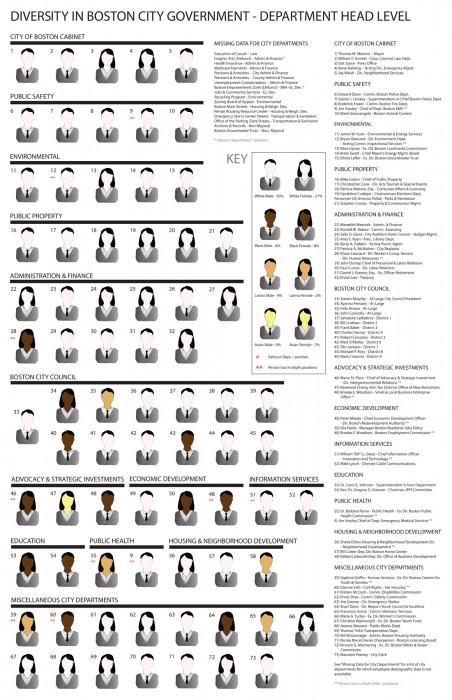
Mayor Menino has long touted his commitment to diversity in the City of Boston. Recently, when criticized by organizations such as MAMLEO and others, including the Blackstonian, the Mayor said the City of Boston is diverse and he challenged anyone to prove him wrong.
The Blackstonian accepted that challenge.
Here is the proof that Mayor Menino is wrong and that the City of Boston is not diverse in its governance.

Community Spotlight, News, Politics

MassDOT appoints Eddie Jenkins chief diversity and civil rights officer

MassDOT appoints Eddie Jenkins chief diversity and civil rights officer Former chairman of the state Alcoholic Beverages Control Commission, Eddie Jenkins was last week appointed as the new chief of diversity and civil rights officer for the Massachusetts Dept. of Transportation. Jenkins is a lawyer and former professional football player. Please see bio from: The HistoryMakers Professional athlete and attorney Eddie Joseph Jenkins, Jr. was born on August 31, 1950 in Jacksonville, Florida. His parents, Essie Rae Jenkins and Eddie Jenkins, Sr. moved the family to “da Ville” in Flushing, New York in 1955. Jenkins attended Public School #154 and was mentored by Coach Vince O’Connor at St. Francis Preparatory School. There, he excelled in sports and participated in Outward Bound on Hurricane Island in Maine. Graduating in 1968, Jenkins enrolled at Holy Cross College where his classmates included future attorney Ted Wells, author Ed Jones and Supreme Court Justice Clarence Thomas. Graduating with his B.A. degree in 1972, he was drafted by the National Football League. There, Jenkins became part of the 1972 World Champion Miami Dolphins, the only team in NFL history to go undefeated. Winning the 1973 Super Bowl, Jenkins’ teammates included football legends, Paul Warfield, Larry Little, Marlon Briscoe and Mercury Morris. Jenkins also played with the New York Giants, the Buffalo Bills, the New England Patriots and the Green Bay Packers. Jenkins entered Suffolk University Law School in 1975 and earned his J.D. degree in 1978. He went to work for the United States Labor Department where he was instrumental in the landmark labor decision David Pasula v. Consolidation Coal Company in 1980. In 1986, Jenkins established the law offices of Eddie Jenkins and Associates and began teaching as an adjunct professor of law at Suffolk University Law School. The murder of Charles Stuart’s wife caused Jenkins to run against Newman Flanagan for District Attorney of Suffolk County in 1990. He won 38 percent of the vote against the incumbent. In 1993, he ran for an at-large seat on the Boston City Council and finished fifth. He also co-founded 1000 Black Men with Northeastern University’s Joseph Warren. In 1993, he unsuccessfully ran for Boston City Council. In 2002, he ran again for District Attorney of Suffolk County. In 2003, Jenkins was appointed chairman of the Massachusetts Alcoholic Beverage Control Commission (ABCC) by commonwealth of Massachusetts Treasurer Timothy Cahill. As chairman of ABCC, Jenkins is charged with the enforcement, oversight and regulation of over 22,000 liquor licenses. His community involvement includes the Dorchester YMCA, the Multicultural Aids Coalition (MAC), the Vivienne S. Thomson Disability Center and New Covenant Christian Church Sunday School. Jenkins’ son, Julian Jenkins, was drafted as a defensive end by the Tampa Bay Buccaneers in 2006.

Scroll to Top